
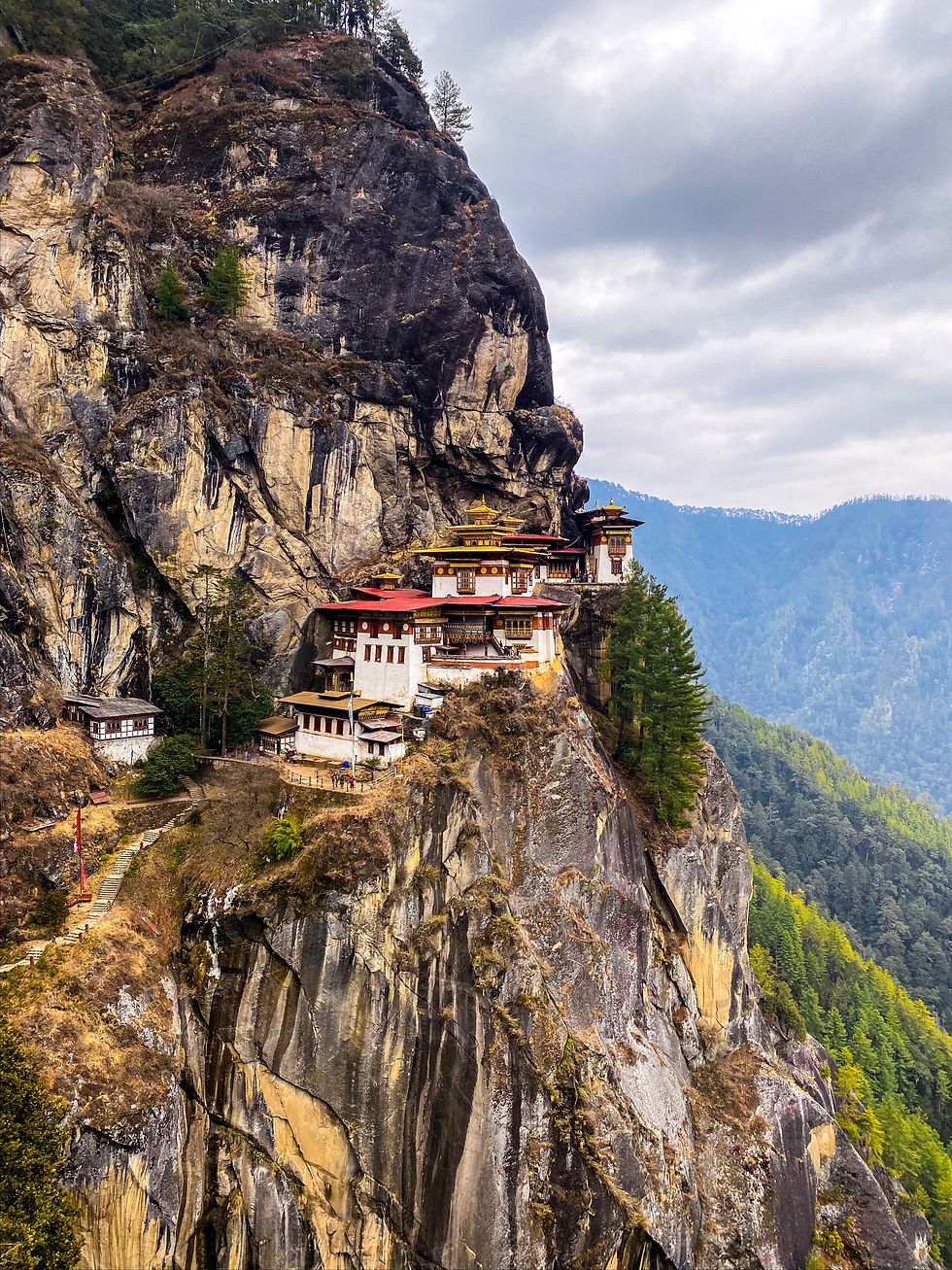

Bhutan
Bhutan is a place that invites transformation through presence rather than effort. It does not challenge you to change or ask you to become something new. Instead, it creates the conditions in which transformation unfolds naturally, gently, and often unexpectedly. The country’s rhythms, values, and landscapes work together to guide travelers inward, offering space to recalibrate how they live, choose, and relate to the world.
Transformation in Bhutan begins with slowing down. Movement through the country is deliberate, shaped by winding mountain roads, walking paths, and daily rituals that resist haste. As the pace softens, attention sharpens. Travelers often notice how quickly the mind settles when there is no pressure to perform, optimize, or produce. In this slower rhythm, long held stress begins to release, making room for clarity and reflection.
Bhutan’s spiritual traditions play a central role in this inner shift. Monasteries, temples, and prayer flags are not symbolic backdrops but active expressions of devotion woven into everyday life. Morning chants, spinning prayer wheels, and quiet moments of contemplation invite visitors to engage with stillness in a meaningful way. Many people find that being surrounded by these practices encourages deeper listening, both to the present moment and to questions they may have been avoiding. Transformation emerges as awareness rather than instruction.
Walking is another powerful catalyst for change in Bhutan. Whether hiking forested trails or ascending to remote monasteries, the physical act of moving through the landscape becomes a form of meditation. Breath aligns with step, and effort becomes intentional rather than rushed. In these moments, travelers often experience a sense of grounding and resilience that carries beyond the journey. The body remembers how to move with purpose, and the mind follows.
Equally transformative is Bhutan’s relationship with happiness and well being. The country’s emphasis on balance, ethical living, and collective care invites travelers to reconsider their own definitions of success. Exposure to a culture that prioritizes enough rather than more often leads to meaningful internal shifts. People begin to question habits of excess, distraction, and constant striving, replacing them with values rooted in sufficiency, connection, and contentment.
Human connection in Bhutan deepens this process. Interactions are unhurried and sincere, allowing space for genuine exchange. Silence is respected, and conversation is thoughtful rather than performative. These encounters often leave travelers feeling seen without being evaluated. In such an environment, people feel safer to reflect honestly, let go of unnecessary roles, and reconnect with their authentic selves.
By the time travelers leave Bhutan, the transformation is rarely dramatic or loud. It is quiet and lasting. Many return home with a steadier nervous system, a clearer sense of what matters, and a renewed commitment to living with intention. Bhutan transforms not by pushing for change, but by modeling a way of being that gently reminds people of who they are beneath the noise of modern life.